


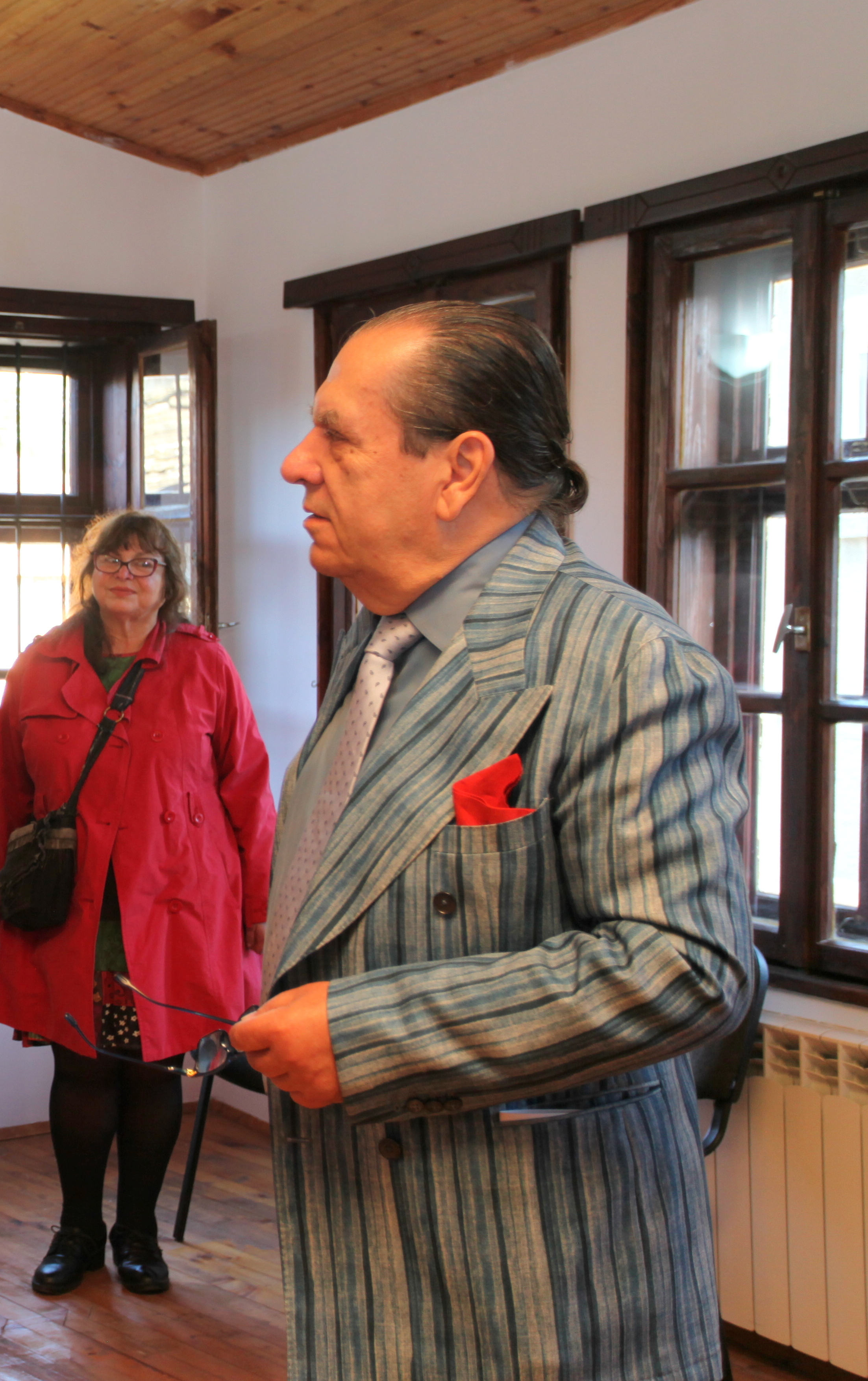
‘Revivalist Prints’, the exhibition organised by the ‘13 Centuries of Bulgaria’ National Endowment Fund, and held at the Gabenski Gallery in Tryavna on the 45th anniversary since the Fund’s establishment and 20 years since the opening of Gabenski Gallery, introduces the viewer to unknown works of this popular graphic art in Bulgaria.
The prints are made by engraving a drawing into a wooden base; the raised image is inked to produce an impression and then printed on paper using a press. These images were very common during the Bulgarian National Revival. For the most part, they depicted canonical images of saints, gospel scenes, a variety of religious subjects and legends, and their figural characteristics were similar to that of the icon. They were widely distributed—initially brought by pilgrims who visited the Holy Sepulchre or Mount Athos. Gradually, this graphic technique was fully mastered and developed in the country, and mainly in Bulgarian monasteries. Many ateliers were founded, including at the Vratsa Monastery of St John of Rila; the Troyan, Rila, and Bachkovo monasteries, which gained popularity owing to the oeuvres of master engravers that have survived to this day. The art of engraving also flourished in the town of Samokov, the hub of the famous painting and woodcarving school. Printing became a profession for many Samokovians, and in the second half of the 19th century, this activity became the primary livelihood for entire families.
The mass propagation of prints during the National Revival epoch was due to their specific features—they were readily available, easier to carry, and of high cognitive value. Many of the prints tell the stories of monasteries and cloisters, and portray Bulgarian saints and clergymen. Others tell moral parables, depict virtuous acts, and affirm values related to the Orthodox identity of the Bulgarian people during the Ottoman rule. Given their mass distribution, prints also became a form of communication, as they contained information and knowledge that broadened the minds of the Bulgarian. All this made the Revivalist print one of the most interesting and significant artistic forms of expression, contributing to the shaping and development of Bulgarian national awareness in the 18th and 19th centuries.
The exhibition features prints from the collections of two Samokovians, who provided the artworks free of charge.
Assoc. Prof. Boris Danailov