


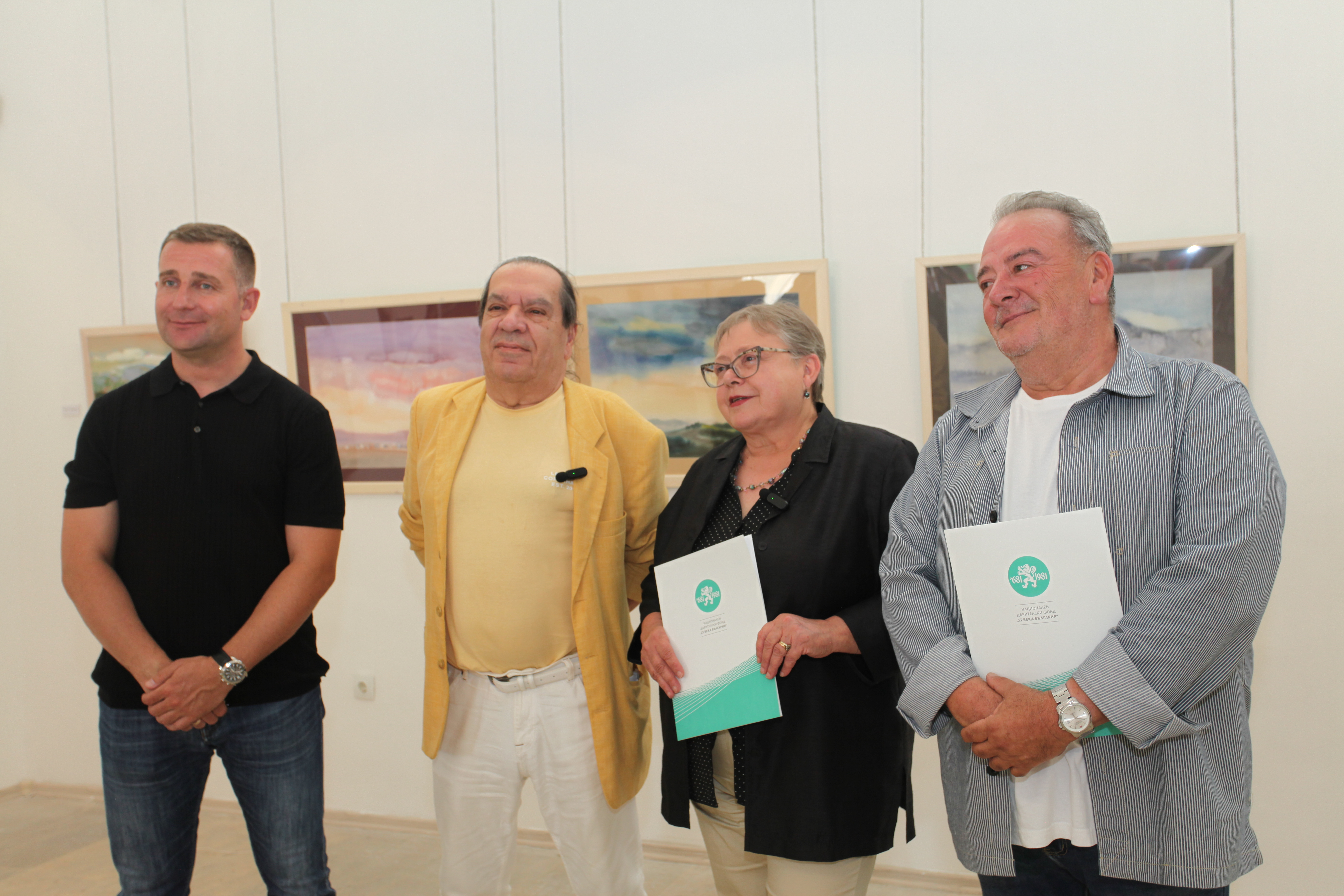
This year, the ‘Threads of Time’ Open-air Event is holding its third edition. Obviously, it is successfully achieving the main objective of the project: implementing initiatives relating to the restoration of traditional manifestations of artistic presence and communication, and sharing new ideas and means of expression by creators working in various fields of the visual arts. ‘Threads of Time’ has an enticing appeal for it builds that invisible texture that maintains the meaningful importance of creative activities in this domain. The thematic framework of the open-air exhibition provides a high level of individual freedom and a dialogic, creative atmosphere.
Thus, imperceptibly, with the efforts of prestigious artists (let us not forget that winners of the highest award—the Zahariy Zograph National Painting Prize—are energetically involved), reviving the link with the ancient artistic traditions of the town of Samokov is naturally being accomplished; the town’s Graphic Art Base, recognised at European level, is demonstrating its potential; and the Prof. Vasil Zahariev Art Gallery is promoting its activities.
In addition to our gratitude to the organisers, special thanks must be extended to the Municipality of Samokov for providing support, organisational expertise and hospitality to the project. Its implementation and upgrading was made possible with the financial support of the Ministry of Culture.
This year, NEF ‘13 Centuries of Bulgaria’ marks the 45th anniversary of its founding. In addition to enriching the Samokov Art Gallery collection with works by the plein-air event participants that the Fund traditionally donates, and after showing the current exhibition in its galleries in Sofia, Sliven and Tryavna, there will be another special donative act. Four paintings by the eminent classic of Bulgarian art, Ruska Marinova (1899─1994), a native of Samokov, will be gifted to the gallery, marking the Fund’s anniversary.
Turning the ‘Threads of Time’ Open-air Event into a tradition for the artistic life of the region and the country, the good organisation, as well as the consistently high artistic level demonstrated by the artists, allow us to foresee a future where it can be developed in the context of an international cultural exchange.
Assoc. Prof. Boris Danailov